Gold Loan Valuation: 7 Essential Checks for Salem Borrowers
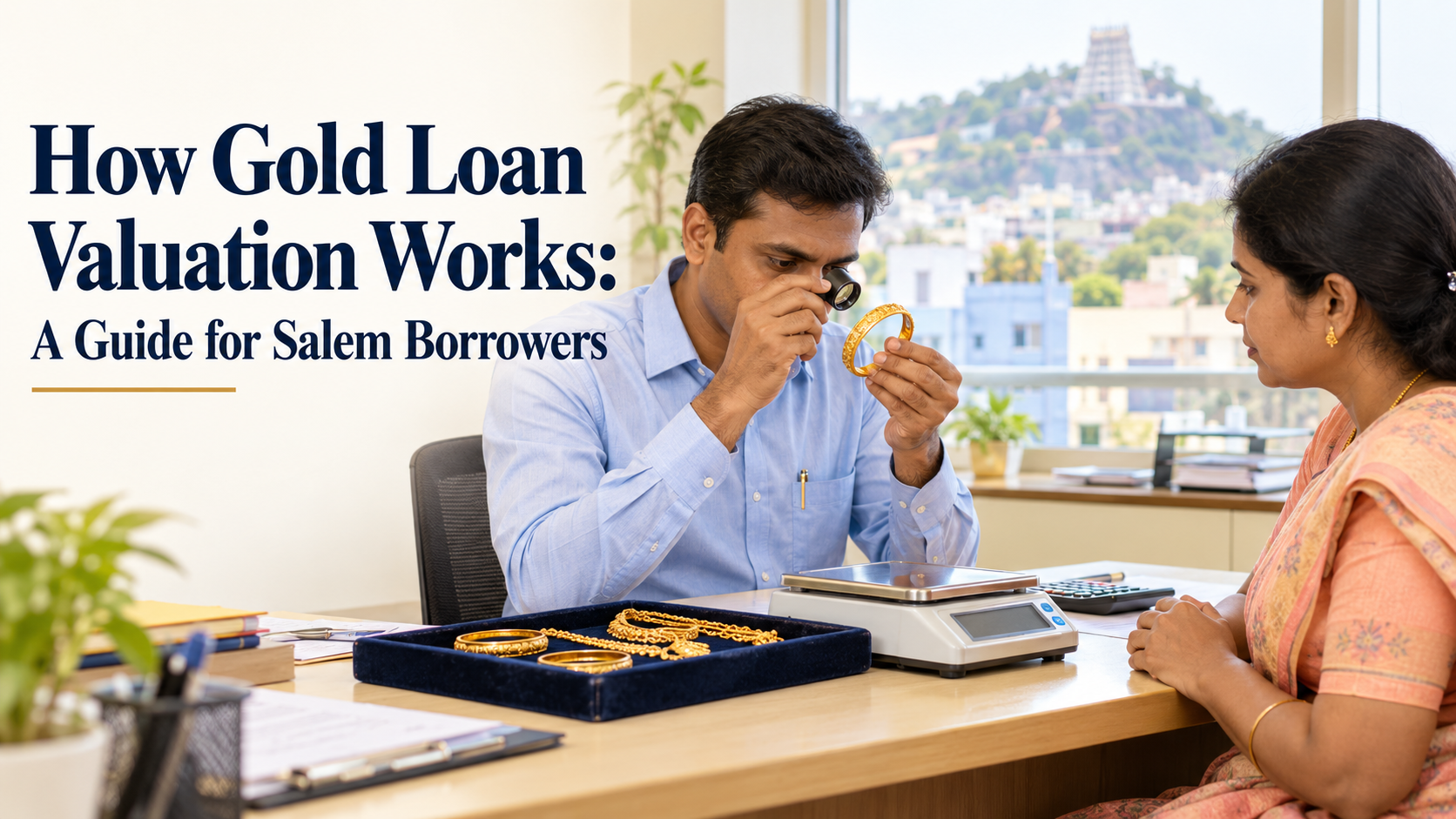
How Gold Loan Valuation Works: A Guide for Salem Borrowers
You take a gold chain to a lender expecting an amount close to its purchase price. The offer is lower, even though gold prices have increased. Why?
The answer usually lies in gold loan valuation. The lender assesses the eligible gold in your jewellery, applies a reference price and then decides how much can be lent against that value. Your original jewellery bill and the amount available as a loan are different figures.
For borrowers in Salem, understanding this calculation can make a branch visit much easier. Instead of asking only, “How much will I get per gram?”, you can ask how the weight, purity, price and lending percentage were determined.
Here are seven checks to help you understand the offer before pledging your jewellery.
1. Understand What Gold Loan Valuation Measures
Gold loan valuation estimates the eligible collateral value of the gold you pledge. It is one part of the lending decision.
Keep these three amounts separate:
| Amount | What it means |
|---|---|
| Jewellery purchase price | What you paid when buying the item, including applicable non-gold costs |
| Assessed collateral value | The value recognised for lending purposes |
| Sanctioned loan amount | The amount the lender approves against that collateral |
There is also a fourth figure to check: the amount actually credited to your account after any disclosed upfront deductions.
A valuation does not promise approval. The lender must also consider the product’s eligibility requirements and applicable lending rules.
Before proceeding, identify the legal lender named in the agreement. If a business is arranging the loan through another institution, ask who will hold the jewellery, issue the documents and handle repayment.
2. Check the Assessed Gold Purity
Purity describes how much gold is present in the metal. Two ornaments with the same weight can have different values if their purity differs.
Common hallmark descriptions include:
| Marking | Purity description |
|---|---|
| 22K916 | 22-carat gold, marked at 916 parts per thousand |
| 18K750 | 18-carat gold, marked at 750 parts per thousand |
| 14K585 | 14-carat gold, marked at 585 parts per thousand |
These are purity descriptions, not a list of jewellery every lender must accept.
The Bureau of Indian Standards explains hallmark markings in its hallmarking FAQs. For jewellery carrying a HUID, you can use the “Verify HUID” feature described on the BIS Care app page.
A hallmark is useful information, but it does not fix your loan amount. Ask the lender what purity it has recorded and how the assessment was performed.
If the assessment differs from the marking or your purchase record, request an explanation before accepting the offer.
3. Compare Gross Weight with Eligible Net Weight
Gross weight is the weight of the complete ornament. It can include stones, beads, thread, wax and other components.
The weight used in the lending calculation may therefore be lower.
Consider this simplified example:
| Weight entry | Illustrative amount |
|---|---|
| Complete ornament | 20 grams |
| Excluded non-gold components | 2 grams |
| Eligible metal weight at the assessed purity | 18 grams |
The next step is to use a reference price corresponding to that metal’s assessed purity.
Avoid double-adjusting purity. If a rate already represents 22-carat gold, do not multiply the value by 22/24 again. Alternatively, a calculation based on pure-gold equivalent weight needs a matching pure-gold rate. The weight and price must use a consistent basis.
Ask the appraiser to show the working rather than giving only a final number.
A useful question is:
“Please explain the gross weight, each deduction, the weight used for valuation and the purity applied.”
4. Ask Which Gold Price Was Used
The retail price displayed by a jewellery shop is not automatically the lender’s valuation price.
Under RBI’s gold-collateral valuation framework, the reference price corresponds to actual purity. It uses the lower of the preceding 30-day average closing price and the preceding day’s closing price, from the specified eligible sources.
This method appears in the RBI’s credit-facility directions for Regional Rural Banks. Your lender should identify the current directions applicable to its own institution and your account.
Request these details:
- Reference-price date.
- Price source.
- Purity represented by the price.
- Rate per gram used.
- Final assessed collateral value.
Also distinguish the valuation rate per gram from the loan offered per gram. An advertised loan-per-gram figure may already include the lender’s lending percentage.
Knowing which number you are comparing prevents misunderstandings.
5. Understand Loan-to-Value Before Estimating Your Loan
Loan-to-value, usually shortened to LTV, compares the relevant loan exposure with the assessed collateral value.
A simple illustration is:
₹1,00,000 assessed value × 75% lending percentage = ₹75,000
Here, 75% is an example—not a universal limit or a YoursPay offer.
For covered consumption loans, RBI’s framework specifies maximum LTV bands:
| Total consumption loan amount per borrower | Maximum LTV |
|---|---|
| Up to ₹2.5 lakh | 85% |
| Above ₹2.5 lakh and up to ₹5 lakh | 80% |
| Above ₹5 lakh | 75% |
These are ceilings, not guaranteed offers. They relate to borrowing amounts, not jewellery-value bands. Income-generating loans require separate consideration.
For bullet loans, where principal and interest are due at maturity, the LTV calculation includes the maturity repayment amount. Consequently, multiplying collateral value by the maximum percentage may overstate the principal available upfront.
Ask the lender to confirm your loan category, applicable limit and actual sanctioned amount.
6. Separate Jewellery Value from Retail Extras
A jewellery bill can include making charges, design costs, taxes and the price of stones. Those amounts should not be treated as extra gold weight or automatically added to a gold-loan valuation.
This explains why the loan offer may be substantially below the purchase bill.
For example, a heavily decorated necklace and a plain chain might have similar purchase prices but different eligible gold content. Comparing their bills alone will not explain their borrowing value.
The same applies to sentimental importance. A family ornament may be irreplaceable to you, so consider that personal significance before deciding to pledge it.
Borrow only what you need and can reasonably repay. A higher eligible amount does not make a larger loan necessary.
7. Check the Written Valuation and Loan Terms
Before agreeing, request the appraisal record and loan documents. Check that they relate to the jewellery you presented.
Ask for a clear record of:
- Number and description of ornaments.
- Gross weight and recorded deductions.
- Assessed purity.
- Weight and price used in the calculation.
- Collateral value.
- Approved loan amount.
Then check the borrowing terms separately:
- Annual interest rate and APR, where provided.
- Appraisal and processing charges.
- Any upfront deductions.
- Repayment dates.
- Part-payment and early-closure conditions.
- What happens if payments are missed.
- Jewellery-release arrangements after repayment.
If you prefer Tamil, ask for the calculation and important terms to be explained in Tamil before signing.
Keep your receipts, agreement and jewellery record together. Do not rely only on a verbal quotation or promotional message.
Gold Loan Valuation Example for a Salem Borrower
The following is a worked illustration, not a current gold price, actual customer case or lender quotation.
Assume:
- The ornament weighs 20 grams.
- Non-gold components account for 2 grams.
- Eligible metal weight is 18 grams at the assessed purity.
- The illustrative reference rate for that same purity is ₹8,000 per gram.
- The lender uses an illustrative 75% lending percentage for the example.
Step 1: Calculate the collateral value
18 grams × ₹8,000 = ₹1,44,000
Step 2: Calculate the illustrative lending amount
₹1,44,000 × 75% = ₹1,08,000
| Calculation stage | Result |
|---|---|
| Eligible weight | 18 grams |
| Illustrative reference rate | ₹8,000 per gram |
| Assessed collateral value | ₹1,44,000 |
| Illustrative lending percentage | 75% |
| Calculated lending amount | ₹1,08,000 |
This simplified example assumes no further adjustment for repayment structure and does not calculate bullet-loan maturity interest.
It also excludes fees. Ask for the approved principal, any charges and the net amount to be credited as separate entries.
Why Two Lenders May Offer Different Amounts
A difference between offers does not, by itself, explain whether either valuation is wrong.
Ask each lender to show the components. Differences may arise from the assessment, quotation date, product margin or loan structure.
Compare the offers using the same questions:
| Comparison point | What to record |
|---|---|
| Jewellery assessed | Same items and quantity? |
| Weight | Same gross weight and explained deductions? |
| Purity | Same recorded assessment? |
| Price | Same date, source and purity basis? |
| Lending percentage | What percentage was actually applied? |
| Costs | What interest and fees apply? |
| Repayment | What must be paid, and when? |
A larger upfront offer may come with a different repayment burden. Review the complete proposal rather than choosing solely by the highest loan-per-gram figure.
If something remains unclear, ask for a written explanation before leaving the jewellery.
Preparing for a Gold Loan Enquiry in Salem
Before travelling to a branch, call to confirm the jewellery types it accepts and the documents it requires. This is especially helpful if you are coming from Attur, Mettur or another part of Salem district.
Prepare:
- A list of the ornaments you intend to present.
- Purchase or hallmark information, if available.
- The identification documents requested by the lender.
- The amount you actually need.
- A realistic repayment plan.
- Questions about appraisal fees, including whether a fee applies if you decline the loan.
You can review YoursPay’s loan eligibility and application information before an enquiry. Confirm the current requirements for the specific gold-loan product rather than assuming every item on a general page applies.
For information about the services listed on the YoursPay website, ask which institution provides the loan and request its current written terms.
Frequently Asked Questions
How is gold loan valuation calculated?
The calculation considers eligible weight, assessed purity and the applicable reference price. The lender then applies the relevant lending percentage and other eligibility conditions to determine the offer.
Is the purchase bill enough to decide the loan amount?
No. A purchase bill may contain making charges, taxes and other costs. Ask for the current appraisal and the calculation supporting the offer.
Does a 916 hallmark guarantee a particular loan amount?
No. The hallmark describes purity. The offered amount also depends on weight, valuation price, lending policy, repayment structure and eligibility.
Will I receive the full assessed value as a loan?
Generally, the approved borrowing amount is below the collateral value. The permitted limit and the lender’s actual offer must be checked for your product.
What should I do if the recorded weight looks incorrect?
Ask for clarification and, where appropriate, a recheck before accepting the loan. Request a written explanation of deductions and retain the appraisal record.
Can valuation change when I renew the loan?
Yes, a later assessment can produce a different eligible value. Ask how any change affects the amount outstanding, required payment and renewal offer.
Understand the Calculation Before You Pledge
A clear gold loan valuation should let you trace the offer from the jewellery presented to the amount approved.
Check the weight, purity, reference price and lending percentage. Then review the interest, charges and repayment dates separately.
For a service enquiry, contact YoursPay and request a written assessment and the legal lender’s details. You can also visit the YoursPay blog for related financial-education articles.
This article provides general information, not personalised financial or legal advice. Example figures are illustrative. Loan availability and regulatory requirements depend on the lender, product and applicable rules.