Digital Banking for Rural India: Transforming Financial Access Across Villages
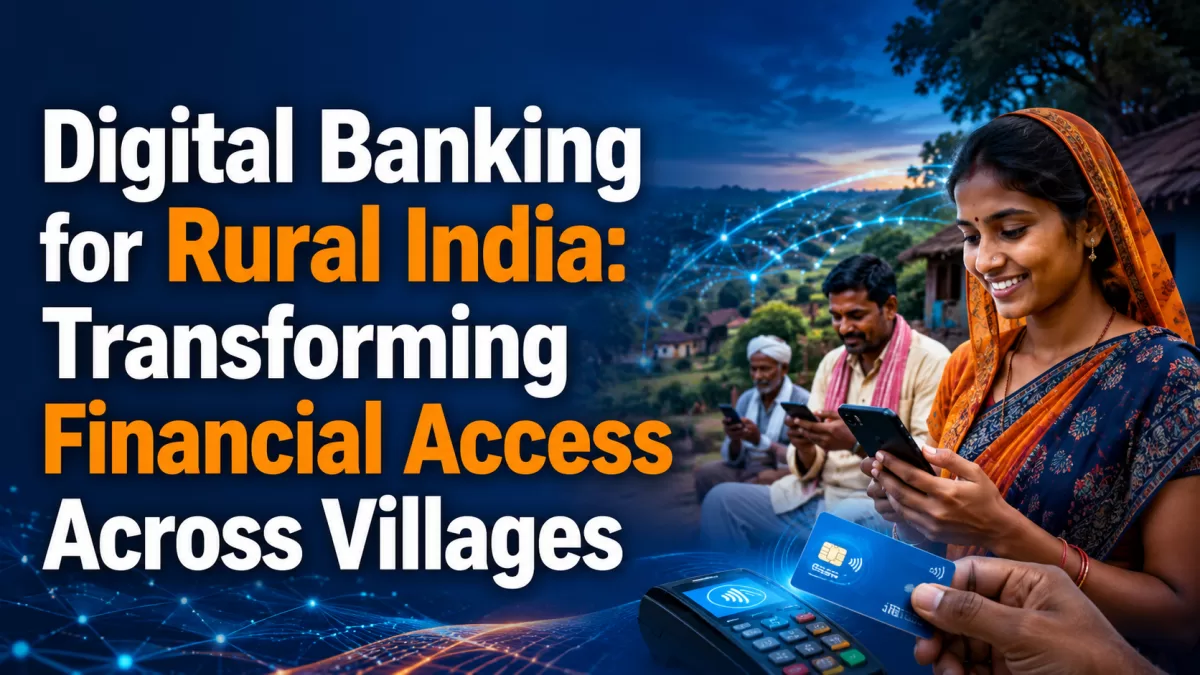
Digital banking is changing the way people access financial services across India. From cities to small towns and villages, more customers are now using technology for payments, money transfers, banking transactions and everyday financial needs.
For rural communities, Digital Banking for Rural India is especially important because it helps reduce the distance between customers and traditional banking services.
In many villages, people may need to travel several kilometres to visit a bank branch or ATM. Digital banking solutions, assisted banking services and local retailer networks can make financial services more accessible within the community itself.
This shift can support better financial inclusion, faster transactions and greater convenience for rural families, workers, farmers and small businesses.
What Is Digital Banking?
Digital banking refers to banking and financial services delivered through electronic or technology-based platforms.
These services may be accessed through mobile applications, online banking, UPI, Aadhaar-enabled systems, business correspondents, retailer service points and other authorised digital channels.
Depending on the service and provider, customers may be able to access facilities such as:
- Money transfer
- Cash withdrawal
- Cash deposit
- Balance enquiry
- Bill payment
- Mobile recharge
- UPI payments
- Aadhaar-enabled banking
- Savings-related services
- Other supported financial transactions
Digital banking does not completely replace physical banks. Instead, it gives customers more ways to access financial services.
Why Is Digital Banking Important for Rural India?
Rural India includes thousands of villages and communities where access to physical banking infrastructure may still be limited compared with major cities.
For a customer living far from a bank branch, even a simple transaction can require travel time and transportation expenses.
Digital banking helps solve this problem by bringing selected services closer to the customer.
A nearby retailer, Business Correspondent or digital service point may allow customers to complete basic financial transactions within their local area.
This convenience can make formal financial services easier to use and encourage more people to participate in the banking system.
Faster Access to Everyday Banking Services
One of the biggest advantages of digital banking is speed.
Customers no longer need to visit a bank branch for every small transaction.
Depending on the available service, they may be able to transfer money, check balances, pay utility bills or access cash through nearby authorised channels.
For rural customers who depend on daily wages, agriculture or small businesses, saving several hours of travel can make a meaningful difference.
Faster financial services can also help people respond quickly to urgent family or business needs.
UPI and Digital Payments in Rural Areas
UPI has become an important part of India’s digital payment ecosystem.
Customers can use UPI to send and receive money, pay merchants and complete everyday transactions directly from supported bank accounts.
For rural shop owners, accepting UPI payments can reduce dependence on cash and offer customers more payment options.
A small grocery shop, pharmacy, tea stall or service centre can display a UPI QR code and receive digital payments.
Where merchant notification tools such as Sound Boxes are available, retailers can also receive instant payment confirmation without repeatedly checking a smartphone.
This makes digital payments easier to manage even in busy local shops.
AEPS and Aadhaar-Based Banking
The Aadhaar Enabled Payment System, or AEPS, is another important digital banking service that can support rural customers.
AEPS allows eligible customers to perform selected banking transactions using Aadhaar-based authentication through authorised service points.
Depending on availability, services may include:
- Cash withdrawal
- Balance enquiry
- Mini statement
- Cash deposit
- Other supported banking transactions
This can be useful for customers who may not regularly use debit cards or mobile banking applications.
An authorised retailer or Business Correspondent can help customers access these services from a nearby location.
Role of Business Correspondents
Business Correspondents play a major role in expanding banking access in rural communities.
A Business Correspondent acts as an authorised banking service point that provides selected services on behalf of a bank.
These outlets can help customers perform basic transactions without travelling to a traditional branch.
A BC outlet may provide services such as cash withdrawal, deposits, balance enquiries, account-related assistance and Aadhaar-enabled transactions depending on the authorised setup.
For villages with limited banking infrastructure, a trusted local BC point can become an important financial service centre.
Retailers as Digital Financial Service Points
Existing rural retailers can also play a significant role in the growth of digital banking.
A grocery store, mobile shop, computer centre or local service outlet may already have a trusted relationship with people in the community.
By joining an authorised digital financial platform, eligible retailers may be able to add services such as:
- Money transfer
- Recharge
- Utility bill payment
- AEPS
- BBPS
- Other supported financial services
This allows the retailer to serve more customer needs from the same location.
It can also create an additional income opportunity through eligible commission-based transactions.
Digital Banking for Farmers
Farmers often need access to banking services for payments, savings, withdrawals, transfers and other financial activities.
Digital banking can make these services easier to access.
Instead of travelling to a distant branch, farmers may be able to use nearby banking service points or mobile-based services for selected transactions.
Digital payment systems can also help farmers receive money directly into their bank accounts where applicable.
Improved banking access can make it easier to manage household expenses, agricultural payments and day-to-day cash requirements.
Benefits for Rural Small Businesses
Small businesses are an important part of rural economies.
Local shops, traders and service providers can benefit from digital banking in several ways.
Digital payments make it easier to receive money from customers.
Money transfer facilities can improve business transactions.
Online bill payment and recharge services can create additional customer footfall.
A retailer who offers both regular products and digital financial services may become a more convenient destination for people in the surrounding area.
This combination can help strengthen local business activity.
Reducing Dependence on Cash
Cash remains important in many rural areas, but digital banking gives customers alternative ways to make payments and transfer funds.
Reducing complete dependence on cash can offer several advantages.
Customers can send money without physically carrying large amounts of cash.
Businesses can receive digital payments directly.
Families can pay certain bills without travelling to multiple locations.
Digital transaction records may also make it easier for customers to track payments.
The goal is not necessarily to eliminate cash, but to give rural customers more flexible financial options.
Supporting Financial Inclusion
Financial inclusion means ensuring that people have meaningful access to useful and affordable financial services.
Digital banking can contribute to this goal by reaching customers beyond traditional bank branches.
When banking services are available through smartphones, Aadhaar-enabled systems, UPI and authorised local service points, more people may be able to participate in the formal financial system.
This can support savings habits, digital payments, access to banking services and better financial awareness.
For rural communities, accessibility and trust are especially important.
Challenges of Digital Banking in Rural India
While digital banking offers many benefits, there are also challenges.
Internet connectivity may not be equally reliable in all locations.
Some customers may not be comfortable using smartphones or mobile applications.
Digital fraud and lack of awareness can also create risks.
Other challenges may include:
- Limited digital literacy
- Network interruptions
- Lack of awareness about authorised services
- Fear of online fraud
- Language barriers
- Biometric authentication issues
- Limited access to suitable devices
These challenges highlight the importance of assisted digital banking and trusted local service providers.
Importance of Digital Banking Awareness
Technology alone is not enough.
Customers must also understand how to use digital banking safely.
Basic awareness should include:
- Never sharing OTPs
- Never revealing PINs or passwords
- Using only authorised applications and platforms
- Checking transaction details before confirming
- Avoiding suspicious links and calls
- Taking receipts or confirmations where available
Retailers and banking service providers should clearly explain charges and transaction details to customers.
Trust and transparency are essential for the long-term growth of digital banking in rural areas.
Digital Banking Creates Local Opportunities
The growth of digital banking can also create business opportunities within villages and small towns.
Eligible retailers can become digital service providers, Business Correspondents or payment service points.
This may help create additional local income while improving access to financial services for the community.
A reliable digital banking outlet can attract regular customers who need withdrawals, bill payments, recharge, money transfer or other supported services.
Over time, such service points can become valuable parts of the local economy.
Digital Banking Solutions with YoursPay
YoursPay provides digital financial and retailer-focused services designed to make everyday transactions more accessible.
Customers and eligible retailers can explore supported services such as digital payments, AEPS, money transfer, bill payment, retailer services and other available financial solutions based on current eligibility and applicable terms.
For entrepreneurs in rural and semi-urban areas, YoursPay can also provide information about available retailer and digital service opportunities.
The exact services, transaction limits, commissions and onboarding requirements may vary depending on the current platform, banking partner and regulatory guidelines.
Customers and retailers should review all applicable terms before using or offering financial services.
The Future of Digital Banking in Rural India
The future of rural banking is likely to involve a combination of physical bank branches, mobile technology and assisted digital service points.
Smartphones and digital payments can serve customers who are comfortable using technology independently.
At the same time, local retailers and Business Correspondents can assist customers who prefer personal support.
This combination can make financial services more accessible to a wider range of people.
As digital infrastructure and awareness continue to improve, more rural communities may benefit from faster and more convenient banking options.
Final Thoughts
Digital Banking for Rural India is helping bring financial services closer to people who may have previously depended entirely on distant bank branches.
UPI, AEPS, Business Correspondents and authorised retailer networks can make everyday banking more convenient for rural customers.
These solutions can also support small businesses, increase local service opportunities and encourage greater participation in the formal financial system.
The most important factors are accessibility, security, customer awareness and reliable service.
With the right infrastructure and responsible implementation, digital banking can continue to play an important role in strengthening financial access across rural India.
Related YoursPay services in Salem
- Digital banking services – AEPS, Aadhaar Pay, money transfer and PAN services.
- AEPS services in Salem – Aadhaar-based cash withdrawal and banking at your shop.
- Money transfer (DMT) – send money across India from a nearby shop.
- Contact YoursPay – call, WhatsApp or visit our Salem office.